Showing posts with label Regency homes. Show all posts

Wednesday, August 2, 2023

Today's bon bon: You look for a house where your hero lives...and where his heroine will first meet him and you discover that...

You look for a house where your hero lives...and where his heroine will first meet him and you discover that the house you choose from a map of London because you "feel" that it is one you've seen, and you discover the house once belonged to someone famous.

Very famous!

Like Caroline Norton! She of the notoriety of having been accused by her husband of a liaison with Lord Melbourne and subsequently losing rights to her children. However, she did protest by writing treatises and books that argued for the rights of women. She lived here at No. 3 Chesterfield Street, Mayfair.

It is a small world! Intriguing, always.


Monday, July 31, 2023

Today's bon bon: Amazing what you find when you look for your heroine's family's home in Paris! This!

Among the many ah-ha moments, I love when research brings me something I can smile about...and visit!

Here is a picture of Daisy Molyneaux's family home in the 1st Arrondisment of Paris. The Hotel de Toulouse, owned by her parents in the 1780s, is a building that still stands.  As I describe in BECAUSE OF YOU, this home was built by her great grand father who was an illegitimate son of Louis XV.

During the REVOLUTION, houses like this were seized by the Committee in Paris as national property. A few years later, Napoleon came to power and took this building and gave it to the Banque de France.

And there it stands today!


Monday, January 25, 2021

Dear Mama, Not all Vicars are prudes! I know!


Amazon! KU!  99 cents Only on Pre-order NOW!

St. Andrew’s in the Field
Courtland Green
Wiltshire


The gifts that the Good Lord had granted to Charles Compton, younger son of the Duke of Southbourne, had been many. Sound body, quick mind, kind father, loving mother, formidable education, stout-heart friends and few…if any, foes. He counted these regularly. One should, one would if one were the vicar of a parish with a congregation of one hundred and two souls who were, usually, moderate in their passions and hard-working for their master. Charlie—for he had always thought of himself in that informal way which was the address his mother had used—had come to his calling easily, at his father’s encouragement and at a young age. So when he had chosen to leave his first parish in Sussex and gone off to fight the wars in Spain and France, he’d done it out of as big a love, this time for Country and Crown. His service abroad had been long—years in fact. That it had also opened his eyes to the inhumanity of man to man was a dastardly result. Hard to swallow, really. So when he left the chaplaincy of the Army and returned home last year after Bony had abdicated, his displeasure with the failings of the human spirit had tempted him to leave the clergy altogether. Yet a man must be practical, eh?

And so he had resumed his morning practice of counting his blessings. Soon he was in search of his next assignment and soon took the offer of the Viscount Courtland. St. Andrew’s was a lovely chapel on the man’s estate. And the living he offered Charlie was extraordinarily generous, given the penury that most Anglican clergymen were thrust into upon taking a parish to themselves. That good fortune (not to put too much glory to five hundred pounds a year) was added to Charlie’s daily list.

Among those gifts he praised heaven for, no woman had ever appeared. Oh, he had enjoyed his early years as a young buck in London. His social status what it was, he had similarly well-bred friends and family whose invitations to balls and house parties he always accepted. He knew the One Hundred well. A duke’s son, you know, never lacked for acquaintances or opportunities. His friends and those who were not had marveled that he had decided to enter the Church. 

“Trade?” asked one of his second cousins. “Join me. Sugar from the Indies. I need help.”

But Charlie had declined adventure in the jungles of the New World in favor of the church.

“How can you get on?” his friend, Winston Fullerton had pressed him. “You’ll never have a penny to call your own.”

Money had never been lacking in Charlie’s life so at that point, he easily answered Fullerton that coin was not what made people happy.

“And marriage? Children?” Fullerton had continued. “What if you fall in love?”

“Love,” Charlie had answered, “could come in church as well as out of it.” Or he hoped that would be so. After all, he’d had a general introduction to the varieties of male-female attractions. He had experienced lust, a sad but true admission. Most of those incidents, however, had occurred in his callow youth and five times in Spain (yes, he recalled each one vividly) after imbibing more than a temperate amount of bad Spanish red wine.

Now he was thirty years of age and so, he began to doubt love might come his way. In fact, he doubted love in general came to men easily. He’d seen men slaver after nubile debutantes and wonder at the attraction. He’d seen others mad to possess another man’s wife, a widow or a doxy from the streets. Charlie had admired a few women for their beauty or their skills at cards. But no one woman had ever captured his imagination with a look or a word…or a quest for understanding.

So it was with surprise at himself that he found a woman, head bowed, in one of his pews one spring afternoon, her ebony hair an intricate crown upon her head, her long gloved fingers clasped together in plea, as she argued with God.

“I don’t see why you would do this.” She shook her head, her eyes squeezed tightly closed. “It’s really quite unfair, you know. I’ve been very good.”

He put one hand to the curved back of the sturdy oak pew. He should tell her he was here.

“I’ve been virtuous, Lord. Though who wants to be?” She raised her face. “I’d like a man to savor. A true love to climb into bed with. Just like Esme.”

What? Really? Esme Harvey was Viscount Courtland’s daughter. Esme had climbed into bed with… Oh, this is none of my business! 

“As her friend, I’ve stood by her through all her antics.”

Charlie smiled. A boon companion, eh? Well, hell. Ahem. We all need one of those. Or more!

“To my mother and father, I’ve been respectful. Obedient. Even to the point that now, I cannot be!”

If now she was going to confess sins, he should really make himself known.

“But you know that if I stop agreeing to marry, they will think me odd. I’m not odd!” She sat taller and the lovely line of her profile down the lone line of her neck to her charmingly generous points of her breasts was a vision that set his pulse pounding. And another part of his anatomy stirred to life too.

He raised his hand to announce himself when—

“I will kill them!”

What? Kill? Who?

“You cannot,” she seethed with despair and dabbed at the corners of her eyes, “you simply cannot betroth me to another man.”

No. Definitely not.

That hair, that perfect nose, those wonderfully full lips, that throat and those breasts belong to a man who could savor them…like me. 

https://amzn.to/3qbv8gH

Monday, October 7, 2019

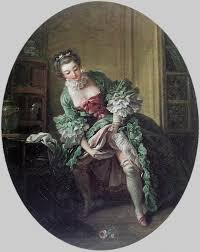
What precisely is a bourdaloue? And why would we need one? Hmm! Secrets of the bedchamber!

Before indoor plumbing, the private matters of personal toilette were carried out in very different ways from today.

In country homes and chateaux, water was primed from a pump and carried into the house in buckets. Heated, if necessary and then carted about inside in same buckets or perhaps pitchers.

Some houses were fitted with cisterns on the roofs to catch rainwater. Make-shift showers could be had by pulling the lever to allow the water to cascade down. But yes, that water was cold.

What then of disposal of bodily wastes?

While a few who were rich, including monarchs and their families, had privy chairs, beneath those open seats were, quite frankly, pots. In country houses and chateaux disposal of waste was much the same as in the growing cities. Waste was carried to the back of the house and dumped in bins for the night soil collector to dispose of. As we see below in one cartoon, urine was often simply thrown into the streets. Open sewers were a source of disease and contamination until the later part of the 19th century.
Until then, removal of waste was done by hand. By the hands of servants or the persons themselves, bodily eliminations were carried out in chamber pots or bourdaloues.

A pot is easy enough to imagine. Here is one with a fellow inside, who presumably, is there to guide one's aim!

But what, pray tell, is a bourdaloue?

A small receptacle usually made of porcelain, these boats, if you will, were specifically made for women to urinate in. Above, at the opening of this articles one and here is another rather lovely example!
But how were they used?

While one can imagine, I thought I spice up your day and show you a few illustrations from the period! Some are paintings, other cartoons! Do enlarge to read the captions. Useful to note that these folks could and did laugh at their inconveniences. One not so hilarious cartoon is the one in which one gentleman, I use the term loosely, is relieving himself in the same room with his dinner partners!

Why do I mention any of this? Because I am finishing up THE BUTLER'S FORBIDDEN FANCY, a short Christmas story in my CHRISTMAS BELLES series, and the hero who is a butler is discussing his duties. They would include ensuring that the guests at his employer's home have sufficient pots and bourdaloues for their conveniences!


https://www.amazon.com/Cerise-DeLand/e/B0089DS2N2/


Friday, June 7, 2019

Servants run the house...and fall in love with their employers? GASP!

Find BUTLER and GOVERNESS here!
I’ve often delighted in touring English houses. In every nook and cranny, I’ve found little joys that I’ve tried to add in my novels.
Regency Town House
Brighton, England
In my fictitious Dudley Crescent that I invented for this series, Delightful Doings in Dudley Crescent, I take bits and pieces from a few houses I’ve visited in England. Most often, I reference floor plans for a house in Brighton that I recommend everyone visit. This house, officially dubbed Regency Town House, is currently being restored by volunteers who are specialists in home construction and Regency period lifestyles. They have formed a non-profit organization and promote their work in Brighton, offering tours, dinners and other entertainments to educate everyone. 
When I last visited, this group was involved in discovering the original paint colors on the walls, ceilings and fittings. Here I show you the intricate design on drawing room shutters. Each house in Brunswick Square originally sold in the 1820s for approximately three thousand pounds. This did not include cost of such items as chandeliers, elaborate moldings, draperies or furnishings. A buyer could expect to purchase his or her own embellishments, according to his means, to make the house a home.
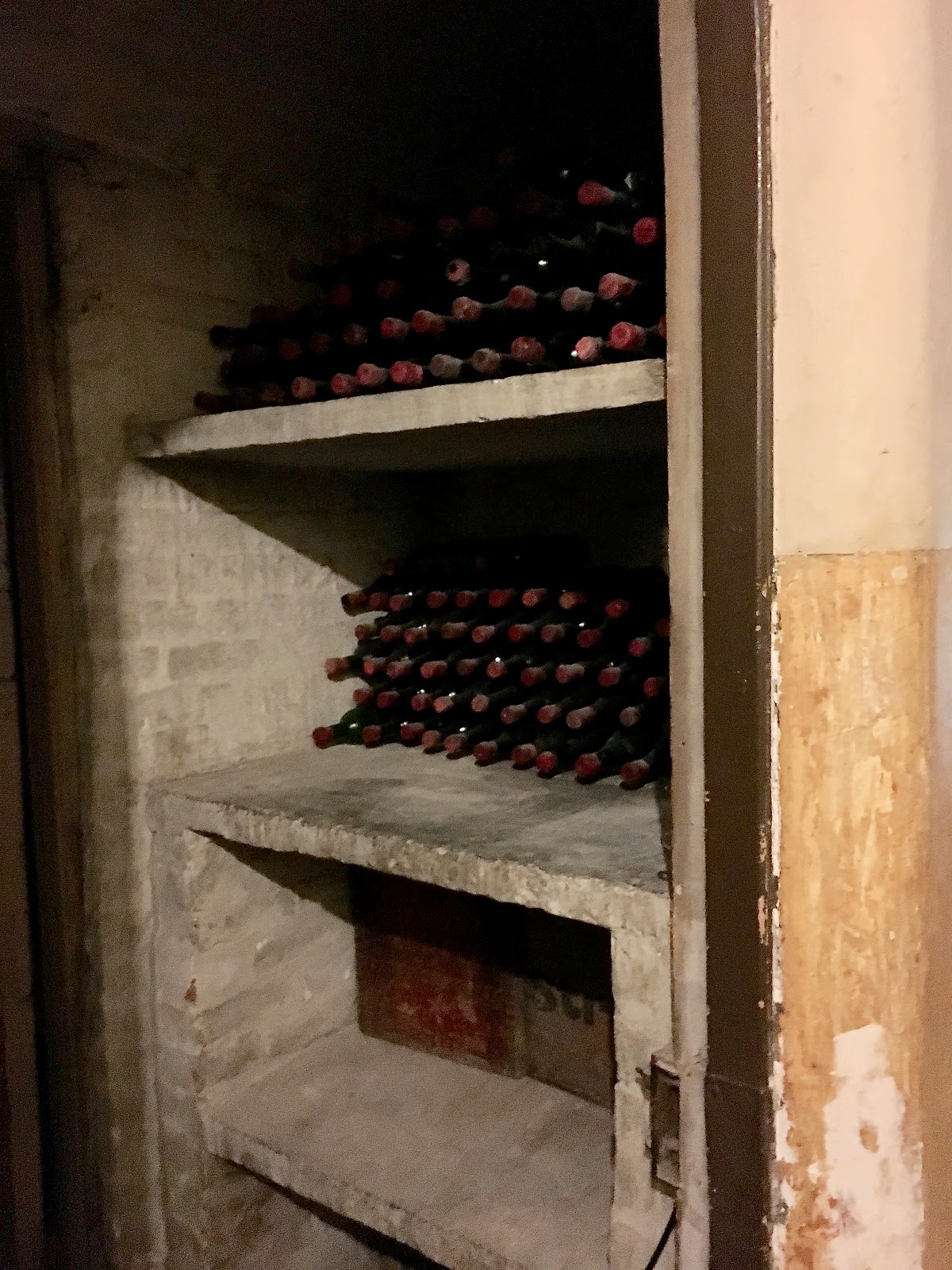
Butler's Wine Cellar,
Brighton England
When completed, a townhouse would be home not only to the owners’ family but also a team of servants. In this Brighton home, for example, servants could enter the house from the front street with steps down to the basement. There the housekeeper had her spacious room, the butler his wine cellar, the servants their dining room, an exit to the center kitchen garden and the servants’ privy! From the center hall in the basement, servants waited upon their masters upstairs accessing their own staircase. This rough-hewn wooden set of steps was narrow and lit only by one window. Near this staircase is the kitchen, a wide expanse with cupboards, a glass ceiling and a huge fireplace. Maids slept in an alcove in the kitchen and footman slept on the cold stone floor. From the kitchen, one could exit to the mews.
Shutter decor
Regency Town House,
Brighton, England
While my Dudley Crescent townhouses most nearly resemble the Brunswick Square Brighton townhouses, they haves similarities to the Royal Crescent in Bath and to those in Earl’s Court in London. A few similarities also exist with architect Sir John Soanes’ house in London. Do visit this house when you are there next. Wonders abound, especially his device for hanging and displaying his precious collection of paintings. 
Door Decor
Syon House,
London, England
Townhouses showed the owners’ wealth and status. These homes often rivaled the nobles’ main country homes and their London residences in quality and appointments. Owners brought in sculptures, paintings and furnishings and even built little libraries. Whether in London or in smaller cities and towns, the different layouts and styles offer a treasure trove for a happy tourist!
Noting how Belle, my heroine in HIS TEMPTING GOVERNESS, hid her documents in secret drawers, I will tell you that the cabinetmaker acclaimed for this was George Hepplewhite. An Englishman, he crafted desks and other types of cabinetry with hidden compartments. His work, often imitated by other lesser known craftsmen, was popular. Belle’s family could have owned quite a few pieces that resembled his style.
Kentish Chronicle, August 4, 1820
I will say as an aside that the auction of Belle’s house was a usual phenomenon. Numerous advertisements appeared daily in newspapers, detailing the auction of houses and contents. Some were estates owned by titled men and women, others had been those of tradesmen or those who had gone bankrupt. Contents up to bid could include everything in the house! Auctions were a means for many families to survive financial ruin.
Be sure to pre-order HIS TEMPTING GOVERNESS now for half price! After release, it will be $3.99!  BUY HERE!


Friday, June 29, 2018

Brighton, Regency Social Whirl and Victorian Seaside Resort: History and Pictures

To complement my latest TRAVELS WITH CERISE video and my travel pictures on Facebook, I post here some of my commentary, my own photos and a few historical references for you!

For references, do see listing at bottom of this page.

To view the video, do go to my FB author page:

Brighton, on the coast of Sussex, was initially a fishing village. On the Channel, the water is brisk, cold, fierce and gray...or I can say it certainly was when I was last there. The intriguing bit about Brighton is, I think, that like Bath, it retains many of the same characteristics of centuries ago.

Brighton, originally called Brighthelmstone, was small, a modest settlement on the coast for many centuries. With a rocky (not sandy) shore, the coast has an odd configuration. This features a beach and tall white cliffs, demarcated by a slope toward the sea which allows for a road on the beach and above it. Even today, you may walk along the Marine Parade (the road) atop the cliff or take the lower coastal level road to stroll along the shore of brown fist-sized rocks. Brighton has no natural harbor, although a modern man-made one for those who own pleasure crafts now exists. The better harbor is to the west, name Shoreham. There, a Custom House still stands and many of the 19th century references (such as newspapers) talk of Revenuers who went out to catch smugglers from Shoreham not Brighton.

The nature of this beach allows for sun-bathing even though walking on those rocks is very tough! The water seems deep enough to wade in or sport surf, and many do! In centuries past, many opportunists took the chance to land their various-sized vessels here to haul in cargo. Brighton, therefore, like many of the other seaside towns on the British coast, was an area were smugglers hauled in contraband. Do see the drawing below which illustrates the cliffs and various people above and below the Parade. Many said that women would often come to amuse the Custom officials while smugglers ran their boats upon the shore and quickly distributed their wares to those merchants who bought their products illegally!

Brighton, 1815

Brighton remained a small fishing village until 1783 when the Prince of Wales (later Prince Regent) visited the town to escape the attentions of his mother and father. Visiting his uncle, the Duke of Cumberland, Prinny came to Brighton often. Loving the sea air and the remoteness from London, he decided to build his own home here. He also decided to build one for his common law wife, Mrs Fitzherbert. While the plan for that house does not survive, Prinny's interest in the town influenced society to follow him. Over the decades, he came often. I currently write a series, CHRISTMAS BELLES, set in Brighton in 1815. Prinny was still Regent and his influence great. The ton came with him to visit for days, weeks, holidays or Christmas. Their presence had a great effect upon the very nature of the town and its residences.

Reward of 200 GBPounds for information
to Custom House, London about smugglers into Brighton!

At first, accommodations for the aristocratic visitors was minimal. They wished to attend His Royal Highness and so had to rent rooms in local homes. Soon it became vital that they stay longer and many wished for finer facilities than were available. A few hotels opened. One, popular then and in Victorian period, still exists.

A few of these larger homes still exist, but are re-purposed. Many of the townhouses we see in Brighton today are compact structures similar to those we see in London from this period. More striking are the Lanes (Laines)  the narrow walkways dotted with shops, pubs, restaurants huddled together a few streets north of the center of town, The Steine.

The Steine (Steyne) denotes the main vertebrae of the town, running approximately north-south. Along this major promenade one walks along a park and arrives at Prince George's marvelous attraction, the Royal Pavilion. This building, a fantasy of architecture, sports the feeling of the best of Mughul architecture outside and inside a fantasy of what was then the perception of Chinese interior decor. Few pictures are here of the inside as the Pavilion is privately owned and operated and on-line sites can offer you a good idea of the interior. (Sold by Queen Victoria to the City of Brighton, the building offers tours of its magnificent collection of art and furniture.)

When Prinny assumed the throne in 1820 on the death of his father, his visits to Brighton became fewer and fewer. Many however continued to enjoy the town, though it was no longer the center of royal activities. Townhouse development, like the marvelous Brunswick Square townhouses (and the must-see Regency Town House restoration) continued. Started in 1823, Brunswick Square boasts a wonderful U-shaped configuration that leads to the sea. The lovely butter yellow paint makes you smile to see it, even from atop British Air's i360 EYE miles up the coast!

When you are in Brighton, do take the tour of Regency Town House. For a pittance, you will have a marvelous afternoon listening to one of their curators tell you about the house, its architecture and those who bought and rented these houses. Other Georgian era townhouse squares exist and you should take a look at those, too.

During Victoria's reign, the town grew dramatically. In 1841, the first railroad line was completed. The railroad station is a beautiful example of 'muscular' Victorian architecture. Arriving there from London in less than an hour now, it took twice as long in the latter part of the 19th century. But with the railroad came Londoners who sought the sun, the sea and fun!

Even today, people come for the day. Many come for the weekend. During the Victorian era, as servants and laborers got their Half-Day, they journeyed to Brighton for the curative powers of the sea air! Ladies came with their long bloomers to wade in the water. They also changed their clothes in so-called bathing machines. Many preferred to dip in the ocean inside these little boxes on wheels!

Brighthelmston 1822

Brighton today still feels like a Victorian seaside. The long Pier, the Clock Tower and the Aquarium are all innovations of the late 19th century. You can still see them and inhale the crisp cool sea air.

Please see below for a few references, should you wish to learn more.

Brighton, 1830

Ladies of a certain reputation were known to distract those on the cliff walk as smugglers landed 
their boats and dispensed their wares to local merchants!

Brighton, 1890 showing Aquarium and clock tower along the Marine Parade! 

Seaside fun! This was the Brighton Top Hat Swim Club of the 1860s!

References:
Antram and Morriss, BRIGHTON AND HOVE, Pevsner Architectural Guides, Yale University Press, lonond, 2008.

The Regency Town House

Brighton Pavilion

Friday, April 20, 2018

Curator of Regency Town House on Travels with Cerise Saturday 4/28 11 EST


Join me Saturday 4/28 at 11 EST/10 CENTRAL/9 MTN/8 PACIFIC when my guest is one of the curators for Regency Town House in Brighton, England!

Last October, when I was in Brighton doing research for my Regency and Victorian historical romances, Paul was my tour guide to this wonderful house whom many professionals restore to its former glory.

Connecting with him on Twitter and Facebook, he saw that I did these LIVE CHATS and voluteered to join me!  I am tickled to have him with me and to answer your questions.

Please visit the website of Regency Town House for more info and do join us Saturday for a marvelous morning of fun and facts!  https://www.facebook.com/CeriseDeLandAuthor/

Monday, September 12, 2016

#Regency Romps, box set #Cover Reveal, #99cents for limited time!

My box set of the first three Regency Romps debuts today!
And (drumroll) it is only 99 cents for a limited time!

It is also on KINDLE UNLIMITED for those of you who subscribe to that.

Buy Link: Amazon

First is Lady Varney’s Risqué Business!

     When a proper lady of the ton takes on a new client in her matchmaking business, she discovers he has one risqué demand. Spend the night with him!

     Lady Kitty Varney runs a discreet matchmaking business to support herself and pay off her late husband's gambling debts. Selective about her clientele, she finds her newest prospective client is none other than Viscount Justin Belmont, the very man she was forbidden to marry years ago. If she accepts him, can she bear to help him wed any other woman?

     Justin however is selective and lists his very exacting criteria for a wife. Kitty is shocked—and delighted to learn she is among the few candidates he’d find suitable. Especially since he demands each candidate spend one night with him.

     Can Kitty deny herself the opportunity to enjoy the charms of the man she's never forgotten? Lady Varney's risqué business might be her saving grace—but it may well become her undoing.

 Rendezvous with a Duke comes second! 
     Anna Fournier secludes herself, scandal staining her family name and all her prospects for anonymity, employment and even love. But one afternoon she plays her newest composition in a piano shop—and one man who cannot forget her decides to right the wrong done her years ago.

     Anna Fournier never intended to fall in love. Not with any man. Especially not a duke. But Hugh Lattimer persists in courting her despite the scandal that surrounds her—and the innuendo that could ruin him.

     Can she escape her past and embrace a future as Hugh's duchess? Or will the man who murdered her father return to ruin her future once and for all?

Finally we have Masquerade with a Marquess (and a sneak peek at #4 in the series, Interlude with a Baron, which is out now, too.)

She wanted to find her family’s stolen treasures. He wanted to avoid caring for her again. But together, they found more than treasure. They discovered love that had endured decades of despair.

     Sophia di Contini risks her life to sail to England alone and slip into the homes of those she suspects stole priceless treasures from her family during the wars. Discovered by Victor Cameron, she agrees to search for her art his way even though she’ll live in his house, yearn for his touch, pine for his kisses…
    
     Five years ago, while spying for the Crown, Victor had spent one scintillating night with Sophia in his arms. But the next morning, she betrayed him to his enemies and he barely escaped.

     Now that she’s come to England, he fights his desire for her. When others attack her, risking her life, Victor decides the best thing to do is to help her find her precious art, even if he risks the chance she’ll steal his heart away…again.

Tuesday, June 28, 2016

Cerise visited #Regency #Osterley Park, brought home a patroness of Almack's!

Caretaker's cottage beyond main gate!
Going to England? One of the best homes to see if you are a Regency fan is Osterley Park. Nestled in a rolling estate not far from central London, the house is a gorgeous example of Regency architecture and Georgian furniture.

Taking the Tube, you can easily get to the stop in a few minutes. Yes, it is a bit of a walk from the station, perhaps a mile or two, but the terrain is flat. (And the trek works off your eggs and banger for breakfast!) If you'd prefer a taxi, those are readily available on the street.

But as for Mr. Deland and me, we did the walk and were glad we did. This always give us a greater sense of the town, the people, the restaurants and yes, I even spied a black gas meter in the sidewalk, circa. 1880!

Nestled off the main road, the house and the grounds sit away from the bustle of traffic. The gate is lovely, the caretakers cottage, too. And then suddenly you are greeted by the four-legged inhabitants! These shown here are only a few of this working estate. Charolais cattle are the drawing card but the day we were here, they must have been on vacation.
The winding walk around the pond toward the house...just there amid the trees.
That four-pillared entrance portico you see was designed (and added on to the house) by famed architect Robert Adams. Interesting because it does not cover the entire walkway to the front doors, it adds a Palladian charm and symmetry that makes the house grander than its more humble Tudor origins. 

Built by a Tudor financier, the house and grounds over the centuries became dilapidated. They were purchased in mid-18th century by Francis Child, a trader and banker. His intention was to keep the original footprint of the Elizabethan house and improve it with Adams' more contemporary sensibilities. Not only did Adam plan to improve the appearance of the outside of the house, but he redecorated the inside by deciding on each piece of furniture and ornamentation. 

Those who owned the house were a family grown rich from their involvement in the East India Company and afterward in banking. The appointments in the house reflect that interest with a lot of Chinese porcelain of the Ming and Ch'ing dynasties, ivory carvings from India as well the yellow and jades colors well associated with those periods. The Long Gallery, where ladies could take their constitutionals on rainy or snowy days, showcases these family treasures.

Intriguing to see so well preserved is the bed in the State Bed Chamber which is more than 14 feet tall and almost 8 feet wide. Huge and canopied, the massive bed was meant for a visit by King George III who never visited. But the crown atop the carved canopy denotes the hope the monarch might arrive. The lavish appointments of linens and coverlet are lovely works of the period. The bill for this room, the bed and furnishings was so enormous, Robert Child ripped up the paper and never told anyone the final tally!

Up an elaborate green marbled staircase are more bedrooms and a library. Each is preserved in varying degrees with period furniture, draperies and fittings. The library is rather bare, because the contents (original works) were sold for profit and/or given to museums long ago. The music room on the main floor features a piano given to one of the ladies of the house. In the servants hall downstairs I suggest you take your time to look at each and every pot, pan, loooong wooden table, sinks for washing vegetables and a century-old oven. Next to that is the estate manager's office, large and dark and imperious. In all, the house inspires visions of who had walked here, what finery they wore, what dreams they dreamt.
Sarah Sophia Child Villiers
Countess of Jersey

(4 March 1785 – 26 January 1867

One intriguing story is about the daughter of Robert Child. Sarah Anne wished to marry the 10th Earl of Westmorland, a known gambler and rake. When the man asked her father for her hand, Robert refused on grounds he was not worthy of her. Plus, he feared the man married her for her fortune.

When the earl asked her father, What would you do if you loved a lady and her father refused you?
Robert replied, Why, run away with her, to be sure!

And so the young man persuaded the lady to elope with him to Gretna Green in Scotland. Robert was in hot pursuit but to no avail. The marriage was completed. The Westmorland's however lived happily together despite the fact that Robert rewrote his will, disinheriting his daughter and awarding all his fortune to her second child. That child was a girl who became a scion of society and famous patroness of Almacks, the famous 5th Countess of Jersey. 

As with houses operated by the National Trust, this one must be preserved by careful cooperation with visitors. Pictures inside were a no-no. And so I urge you to go see the house for yourself. And please do take a preview of the house and fabulous furnishings
at the website! http://www.nationaltrust.org.uk/osterley-park-and-house.