Showing posts with label Versailles. Show all posts

Friday, August 4, 2023

Paris during the Regency: from the Terror to the Second Restoration (Part I: Early 18th century)

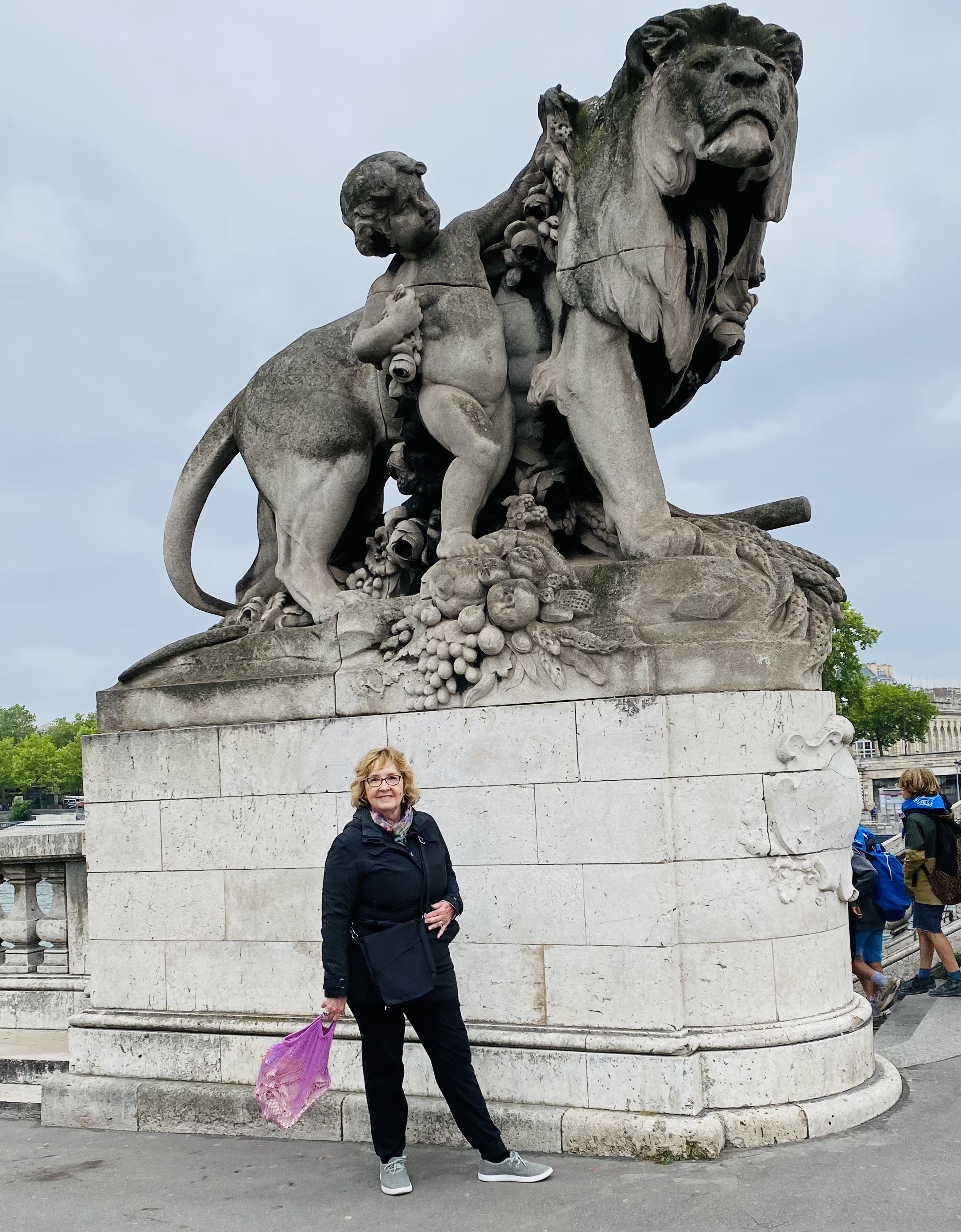
Cerise at Pont Alexandre, 2023

Paris of today is a gorgeous combination of creative civic planning, geography and historical eloquence. To visit is to imbibe the freshness of fine architecture mixed with the greenery so vital to a thriving city. To visit also imbues one with the devotion so many had to maintaining the necessities to keep millions of people fed, clothed, moving, working and living well. 


It was not always so.


The transformation of Paris from a medieval hub of civilization into a metropolis of beauty and renown occurred over centuries. Sometimes that happened in spurts; others over decades. Sometimes it happened with prudent planning; others by accident.


Major changes in the City began as Paris became the hub of economic activity during the reign of Louis XIV. That monarch who fought wars nearly incessantly also brought to Paris diplomats from other countries, cultural tastes that he dictated and decrees about the looks of buildings.


First, to understand the changes to come, we must look at the geography of Paris before the Revolution. Here is an excellent map of the city as it was in 1739. This map was commissioned by the chief of the municipality of Paris, Michel-Etienne Turgot and drawn by surveyor Louis Bretez.


Drawn with all buildings to scale, it presents the city toward the southeast. It has marvelous detail. Do enlarge this section to see that. You can see different types of housing and commerce. This map does not show all of the arrondissements, or departments of modern day Paris, as it corresponds roughly to the first 11 arrondissements of the City, not the current 18.


For more: See https://en.wikipedia.org/wiki/Turgot_map_of_Paris


Here is a small portion of the map which shows the Louvre as it was in 1739. (Kyoto University Library)


Do return as I continue this series addressing all of the following aspects of city growth and dynamics, including:


  • Living Conditions
  • Population: numbers and type
  • Impact and relationship with Versailles
  • Appearance of Old Paris: stone quarries, sanitation, La Peripherique, supply and demand
  • The Seine: its impact, its problems 
  • The caves, tunnels, sewers


Saturday, September 24, 2016

Facts I'll watch for in #Versailles TV show next week! #cookies! #soldiers #France

Laduree shop on Champs Elysee!
With a few courses in French history under my skin, I'm not only eager to see what the producers have done with Versailles the television show...but I'm also wild to note if they got many of the details right! (I have few doubts!)

First, I've noted in the commercials, that Louis and one of his mistresses eat what appear to be cookies from a "tree of cookies." The delicacies are round, composed of two cookies with a fondant or cream in the center. These are the macarons, so famous by Laduree.

Laduree has a shop (among many others elsewhere) along the Champs Elysee, where you can not only buy the delicious filled cookies, but you can dine there.

I will be on the lookout for a mention of the famous macarons!

Louis as a child!
Entrance to Les Invalides which Louis built to care for
his injured, disabled soldiers. Louis engaged in so many wars that
this building stands to this day as his care for them.
It is now a military museum which spectacularly covers feudal
warfare up to modern day.
The other little fact I'm tickled to look for is one that made me giggle in French history seminar. What was it? Louis was so sensitive, so demanding, that when anyone approached his chamber, he insisted they not knock on his door to disturb him.

So, you may ask, what did they do instead?

They were, said the Sun King, to scratch on the door with the nail of their little finger! And to accomplish this on a regular basis, one had to take care of that nail and grow it longer!

Louis was also very particular about the clothing of his courtiers. As in England during periods of war, some fabrics were reserved only for the highest level of the aristocracy. Other levels had restrictions of length of trains, types of garments worn and all in an elaborate system that took an inordinate amount of time for noblemen and ladies to learn!
Queen Maria Theresa, Louis's life, and their son, the Grand Dauphin.

And my last little fact for this post about Louis and Versailles: the cost. Ah, yes. Astronomical. Some  estimates are, in today's money, 2 billion Euros. Other experts say it was 5 times that. Why is there so much debate? Because Louis was careful to keep the real costs to himself. Some say, the complete records were never complete. Secret or incomplete, the taxes he imposed on his subjects to build this famous palace—and to fight the wars he declared, bankrupted the country quickly. His two successors were never able to put the country back on a sound financial footing (including the dissolute Louis XV whom we saw in #Outlander in this last season). Grandeur has its costs!

Louis as a young man.
Very handsome!

Cathedral where all French kings were crowned in Reims, France